Demet Mutlu founded Trendyol in 2010. The company now describes itself as one of Türkiye’s largest e-commerce platforms, with around 40 million customers, roughly 250,000 sellers, more than 40 million products and operations across 35 countries. Those numbers are not the result of one successful app; they reflect a deliberately built system for buying, selling, fulfilment and data-driven operations.
From a market observation to a first product
The useful part of Demet Mutlu’s story is not the familiar “left business school and built a company” narrative. It is the precision of the original market insight. The World Economic Forum’s profile notes her studies at New York University and Harvard before she founded Trendyol. In a 2011 Wired interview, Mutlu explained that she left her MBA programme to focus fully on the business. She saw a clear gap in Türkiye: a strong fashion supply base and a growing digital audience, but no established habit of buying clothing online.
Fashion was a rational entry category. Customers buy repeatedly, assortments move quickly and the feedback loop is immediate. In 2011, Wired reported roughly four million members, 30,000 monthly sales and close to $100 million in revenue during Trendyol’s first 14 months. That is an early-stage snapshot rather than a comparison with today’s scale, but it shows the team’s ability to turn attention into recurring demand.
“You need all the right components in entrepreneurship: finance, consumer understanding, people management, operations and supply chain.”Demet Mutlu, Fortune interview, 2011.
Starting narrow does not mean staying narrow
Early Trendyol was closely associated with fashion and a curated digital storefront. But fashion e-commerce is not just a catalogue challenge: the assortment changes rapidly, and choice must be both easy to navigate and emotionally credible. The company was not trying to become a generic store overnight. It was building an online buying habit in a category where offline retail had been deeply entrenched.
The move to a marketplace altered the economics of growth. Rather than carry the funding burden for every item of inventory, the platform could connect independent merchants. For sellers, Trendyol became a channel for demand and execution; for customers, it created deeper choice. This is the familiar two-sided effect in practice: more merchants make the service more useful to buyers, and more buyers make it more valuable to merchants.
Demet Mutlu establishes Trendyol in Türkiye.
A $1.5 billion round at a $16.5 billion valuation makes it Türkiye’s first decacorn.
Uber completes its acquisition of an 85% stake in Trendyol GO.
What “ecosystem” actually means
For a platform business, scale is not simply a user count. The more important question is how the connected pieces reinforce one another. Trendyol’s official group structure includes Trendyol Tech, Trendyol Express, Trendyol Go and second-hand platform Dolap. These businesses do not all have the same revenue model, nor must they all remain in the same corporate perimeter forever. Their shared logic is to reduce friction between discovering a product and receiving it.
Current figures published on Trendyol’s “Meet us” page. They are neither a forecast nor a market valuation.
The company also reports more than 4,000 employees, representing 35 nationalities across 10 countries. That is why it is misleading to view Trendyol as an interface alone. Commercial operations, customer care, data science, payments, fraud prevention, logistics and merchant support must all work at the same time.
The more durable asset is therefore not the app itself. It is the demand data, merchant network, operational discipline, delivery quality and customer habit that make users come back.

Technology serves the operation
In a large commerce platform, technology is not an innovation showcase. It addresses expensive operating problems: search, demand forecasting, ranking, order allocation, delay management, returns and support. Trendyol Tech is part of the mechanism that converts customer behaviour into useful data and improves the next transaction.
The smaller-business lesson is more practical. There is no need to build an AI laboratory. Identify the process where an error genuinely costs money — procurement, waste, routing or customer response — and make it measurable and predictable.
Logistics is part of the product, not the last step
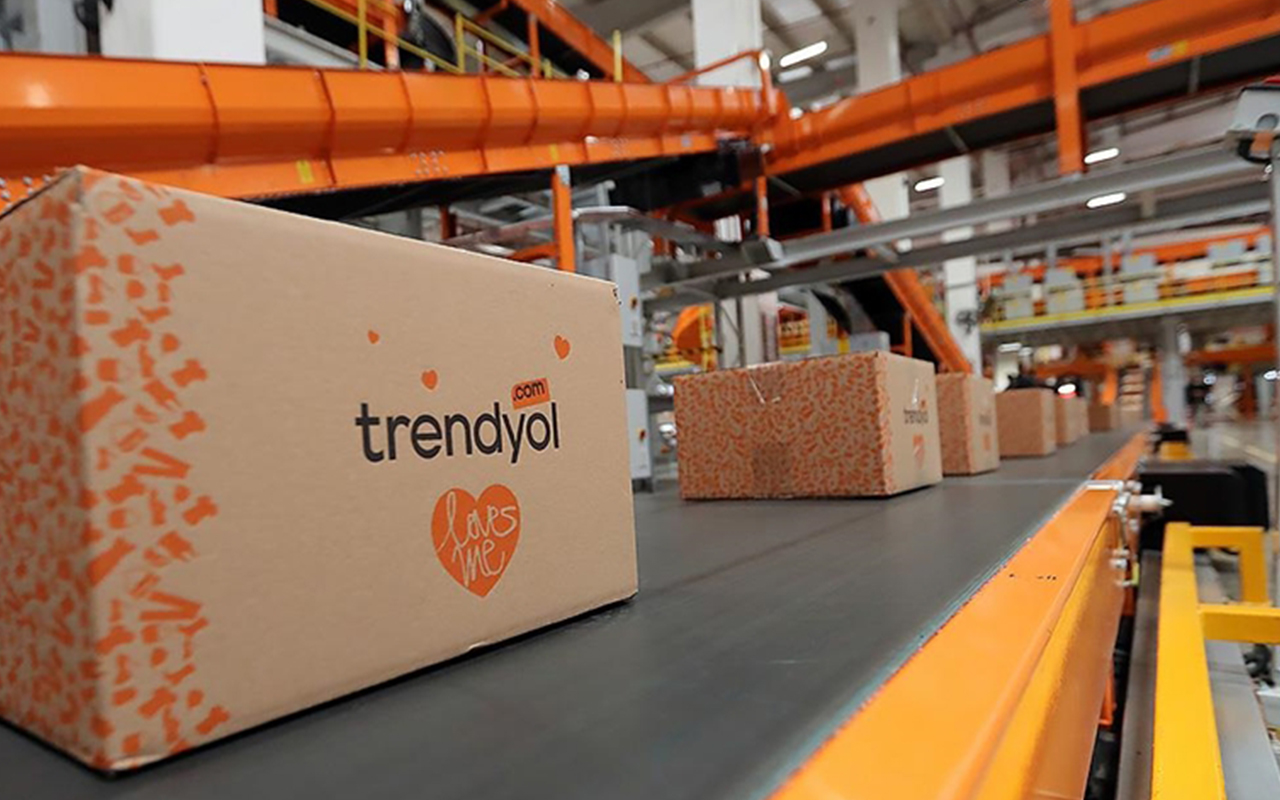
In e-commerce, customers do not remember price alone. They remember whether an order arrived on time, whether they could track it, how a return worked and who took responsibility when something went wrong. If these processes are not under control, marketing may increase orders and amplify chaos at the same time. This is why Trendyol Express is strategically relevant: delivery reliability becomes part of both customer experience and merchant economics.
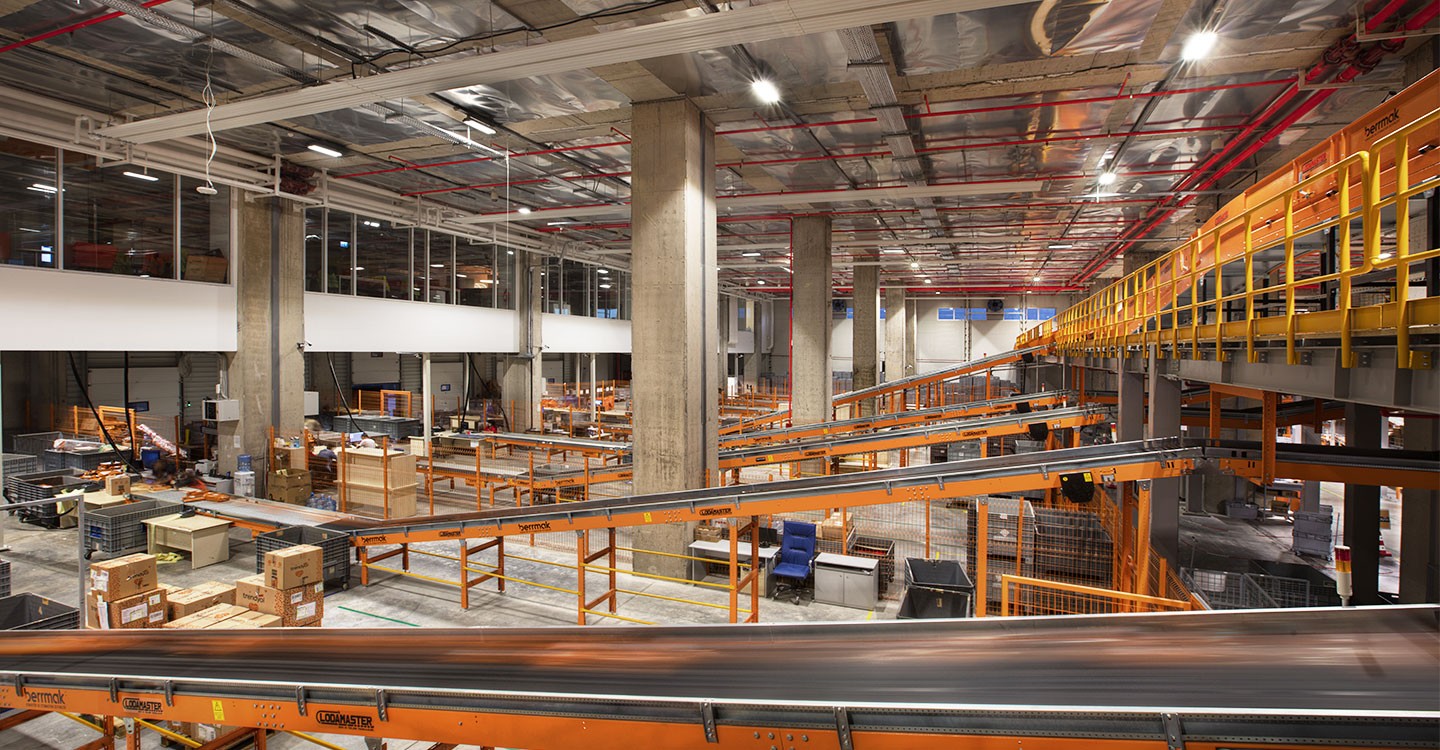
That does not mean every business should own the full supply chain. For a smaller company, integration with strong partners is often the smarter choice. The key lesson is that operations cannot become a blind spot: delivery cost, quality control, return speed and customer experience need to be measured whether they are delivered in-house or by a contractor.

Cross-border growth is more than adding another language
Trendyol lists operations in 35 countries and an office in Baku. But international marketplace expansion is much more than localising a website. Buyers need to trust the proposition; merchants need clear rules; payments, returns and last-mile delivery need to be predictable. In each market, the meaningful measure is not traffic alone but demand density and quality of execution.
The economics behind growth
Gross merchandise value is not the platform’s revenue: most of the money belongs to merchants. Marketplace income commonly comes from commissions, logistics services, on-platform advertising, payments and other services. From there, the business still has to pay for marketing, people, technology, returns and operations. That is why order growth is not automatically economic progress. If customer acquisition rises faster than repeat purchase, scaling can worsen the model.
Discounts and paid acquisition can lift volume temporarily while concealing costly delivery, returns and weak merchant quality.
Each additional transaction benefits from data, network density and a stronger operating model.
Capital accelerates a system; it does not replace one
In 2021, Trendyol raised $1.5 billion at a $16.5 billion valuation, becoming Türkiye’s first decacorn. It was an important financial milestone, but it should not be romanticised. A funding round does not create demand, customer trust or a delivery network. It can provide resources only when an operating model is already capable of using them well.
The evolution of the group’s structure is equally instructive. In May 2025, Uber agreed to acquire a controlling stake in Trendyol GO for approximately $700 million, completing the purchase of 85% in June. Uber’s transaction materials state that Trendyol GO processed more than 200 million orders in 2024 with about $2 billion in gross bookings. That is not a valuation for Trendyol as a whole. It illustrates how an infrastructure business can become a strategic asset in its own right.
A funding round or a large transaction is not proof of success by itself. It follows from measurable value already created: demand, repeatable operations and an asset that matters to a strategic partner.
The founder’s role: designing a system of decisions
It is easy to reduce a company’s story to one person’s biography. A more useful view is a sequence of founder-and-team decisions: choose the opening category, move beyond the storefront, connect merchants, invest in technology and operations, then expand geography with discipline. Demet Mutlu remains on Trendyol’s board, while Baku is one of the company’s international office locations.
Where the model remains exposed
Scale does not make a platform risk-free. A broad merchant base requires consumer protection and quality control; owned logistics requires capital and management discipline; international expansion introduces different rules, tax systems and customer expectations. The Trendyol GO transaction highlights another sign of maturity: not every business line has to stay inside the group indefinitely. Each needs a clear role and a coherent economic case.
The lesson for Azerbaijan and regional businesses
Without merchant economics, adequate supply density and controlled fulfilment, an interface quickly becomes an expensive storefront.
Build trust, data and repeatable execution in one niche, then add adjacent categories, partners and cities.
For Baku and comparable regional markets, this is the more actionable conclusion. A company does not need to begin as a universal marketplace. It may grow from a vertical: B2B supply for HoReCa, services for tourism assets, inventory tools for small retail, local delivery, payments or merchant software. In every case, the starting point should be a specific economic gain: less waste, faster turnover, a lower cost of error or higher repeat sales.
- Choose the bottleneck, not the fashionable format. Demand is more credible when a customer is already losing time or money.
- Measure the operation from day one. Track fulfilment time, returns, margin, repeat purchase and service quality — not only app downloads.
- Build a network, not just a product. Partners, suppliers, operators and integrations can matter more than the next interface feature.
TrustPoint conclusion
Trendyol did not grow simply because it launched a marketplace. It grew by turning a set of interdependent processes into one operating system. Demet Mutlu’s story offers a more useful framework than the search for the next attractive app: begin with a clear category, build demand and supply density, make execution controllable, then widen the platform’s perimeter.