

A beauty salon can be booked out for the week. A car wash can handle dozens of vehicles a day. Rental cars can appear to be in use almost constantly. At a popular gym, evening equipment may be fully occupied.
From the outside, these all look like signs of a successful business. For an investor, the decisive question is different: how much profit remains after every cost, and how much capital had to be committed to earn it?
This is not a ranking of “bad businesses”. Nearly every segment has strong operators. The weakness often sits not in the sector, but in the individual business model.
A beauty salon where the interior became the main asset
Beauty is one of the more resilient consumer-service markets. Clients return regularly, and a strong specialist can retain the same client for years.
The mistake starts when too much of the budget goes into an expensive fit-out, furniture, lighting, a designer reception area and equipment.
At the service level, margins can look high. After rent, payroll, marketing, consumables and idle time, however, a sustainable independent salon more often lands around 10–20% operating margin—not the “exceptional return” suggested by impressive revenue.
Baku is crowded with small studios and salons, and supply grows quickly in accessible locations. Demand should therefore be tested through appointment utilisation and repeat visits, not only through bookings on good days.
Clients are often more loyal to a practitioner than to the salon brand. When a strong specialist leaves, part of the client base can leave with them. For an investor, this is classic key-person risk.
A stronger model looks different: CRM, centralised booking, service standards, in-house training, depth in every specialty, retail sales and an independent brand.

A small rental-car fleet

Car rental can create an appealing investment illusion: the vehicle remains an owned asset while also generating rental income.
For example, a 30,000 AZN vehicle rented for 20 days a month at 45 AZN generates 900 AZN per month, or 10,800 AZN a year, before costs.
But that is not the investment’s true return. The car depreciates, accumulates mileage, needs servicing, tyres and insurance, can be involved in accidents and may sit idle between clients.
The three-to-five-car model is especially debatable when the owner answers calls, hands over vehicles, oversees returns and repairs. It begins to resemble actively managed work with capital tied up in cars.
Corporate and long-term rental are more professional formats: six-to-twelve-month contracts, fleet clients and replacement vehicles. Utilisation becomes more predictable.
A conventional hand car wash
At first glance, a car wash looks like an ideal local business: there are many cars, they constantly need cleaning, and customers must return.
For a two-bay hand car wash, realistic daily capacity is closer to 25–30 cars: one vehicle typically takes 40–60 minutes to process. At an average ticket of 12 AZN, that equals roughly 300–360 AZN a day, or 9,000–10,800 AZN of monthly revenue.
Meaningfully increasing revenue requires a higher average ticket, additional bays, or more output from the existing ones. If the site is rented, the cost of a strong automotive location adds another burden.
Change the format and the investment case changes. Owned land, self-service, automation, detailing, interior cleaning, polishing, ceramic coating, corporate fleets and subscriptions all increase revenue per client.
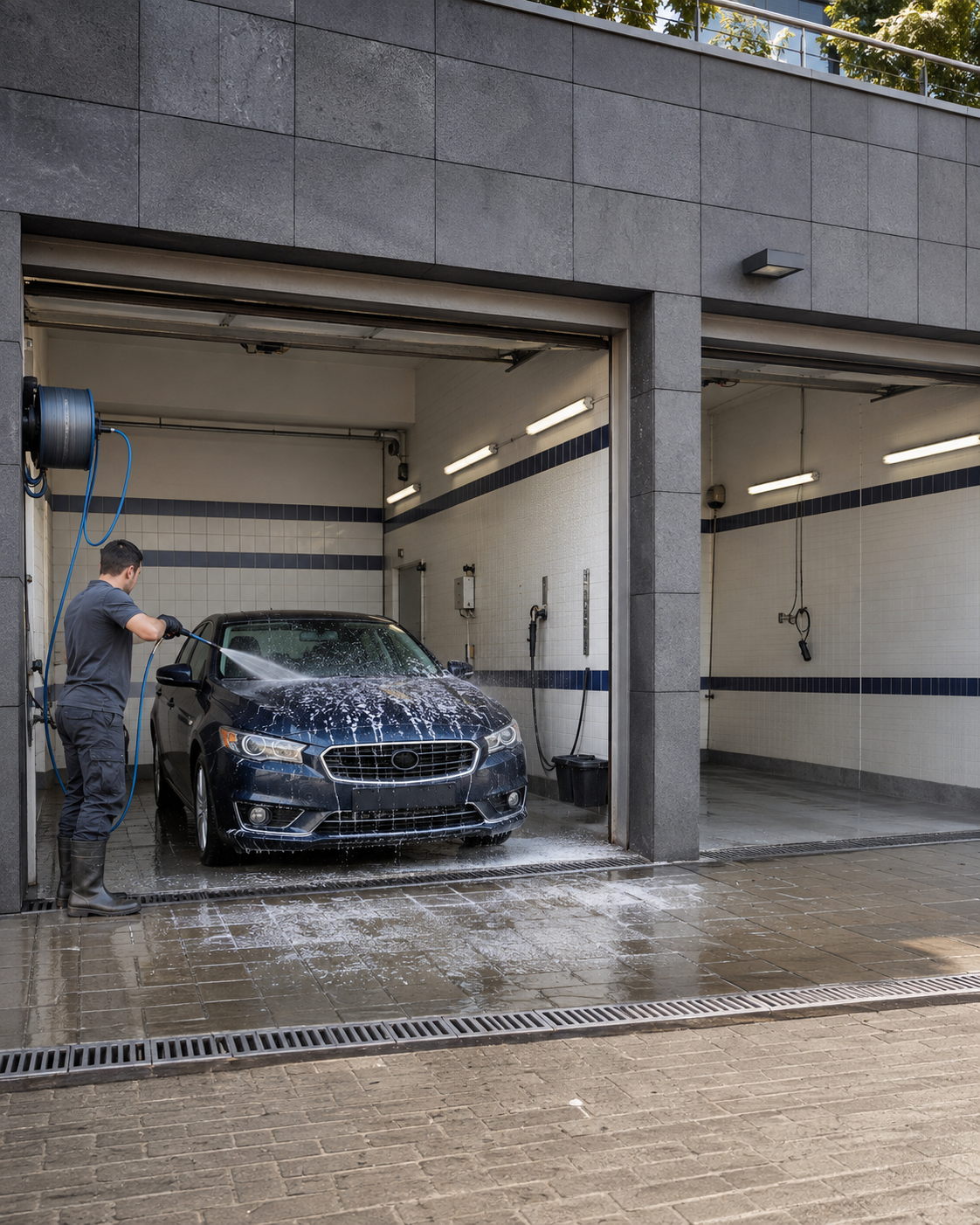
Classic car wash
More cars → more staff → additional bays → higher operating complexity.
Integrated car care
Wash → detailing → interior cleaning → coating → subscription → corporate fleet.
A large gym on expensive leased space


Fitness has an attractive feature: the membership model. Clients often pay several months in advance and do not use the club every day.
But a large footprint is rented continuously. Equipment requires material CAPEX, while ventilation, air conditioning, showers, cleaning, utilities, staff and machine servicing all remain in the cost base.
At 7 p.m. the club can be full, while at 11 a.m. much of the space is empty. Strong evening utilisation alone says little about profitability.
For an investor, revenue per square metre, active members, churn, CAC, renewal rate and off-peak utilisation matter more.
That is why Reformer Pilates, boutique fitness, women-only formats and premium personal training can sometimes outperform a large general-purpose club.
A standard retail store without an exclusive product
Growth in retail does not by itself make an individual store attractive.
When the same product is available from ten other sellers, buyers have a simple comparison tool: price. Once price becomes the main advantage, margins come under pressure.
The second issue is inventory. A significant share of capital sits in stock. A purchasing error turns cash into merchandise that stays on the shelf and increasingly requires discounting.
Strong retail in 2026 is no longer just a room full of merchandise. It is brand + sourcing + customer data + online/offline distribution.

A classic coffee shop with no meaningful distinction

A coffee shop remains one of the most popular choices for a first-time entrepreneur. The high markup on a cup of coffee creates an impression of high margins.
Assume a venue generates 45,000 AZN a month in revenue. It must cover products, wages, rent, utilities, taxes, marketing, consumables, bank fees, write-offs and equipment maintenance.
If opening required 120–150k AZN and the project retains 3–5k AZN a month, the question is not “are there many guests?” but is that return sufficient for capital at risk?
A coffee shop can be an excellent business—with a strong brand, a unique location, owned real estate, an existing audience or a genuinely efficient operating model.
“We will open a beautiful place, serve good coffee and breakfasts” is a concept. It is not yet an investment strategy.
A franchise bought solely because the brand is well known
A franchise can feel safer than an independent business: a recognised name, a proven product, standards, design, training and network experience.
But a franchise does not replace the financial model of a specific unit. The investor still funds CAPEX, fit-out, equipment, rent, staff and working capital; royalties, marketing fees and mandatory suppliers may be added on top.
Before buying a franchise, the requirement is not a polished franchise presentation but P&Ls from comparable operating units: average revenue, EBITDA, full CAPEX, break-even, payback period and closure history.
Four questions before investing
What happens if revenue falls by 20%?
If the company becomes loss-making immediately, its resilience is too low.
Why will the customer stay if a competitor opens nearby?
“Good quality” on its own is rarely a sufficient moat.
Can the business operate without the owner’s constant involvement?
If not, part of the profit is effectively the owner’s wage for their work.
What will be saleable in three to five years?
A brand, client base, contracts, technology and equipment—or only furniture and remaining stock?
Demand is not yet an investment
Nearly all seven models can make money. A good investment, however, must justify both the capital committed and the risk accepted.
A business with 40,000 AZN of monthly revenue can be more attractive than one with 150,000 AZN. A small specialist operation can be better than a large, visually successful one. And sometimes the best conclusion is not to open the project at all.
Sources and editorial notes
- State Statistical Committee of Azerbaijan — macroeconomics, retail trade, inflation and vehicle-fleet statistics.
- Inbound-tourism data is used only as one demand factor for car rental; it does not determine the return of any individual operator.
- All financial examples in this article are scenario models for explaining unit economics, not market averages.